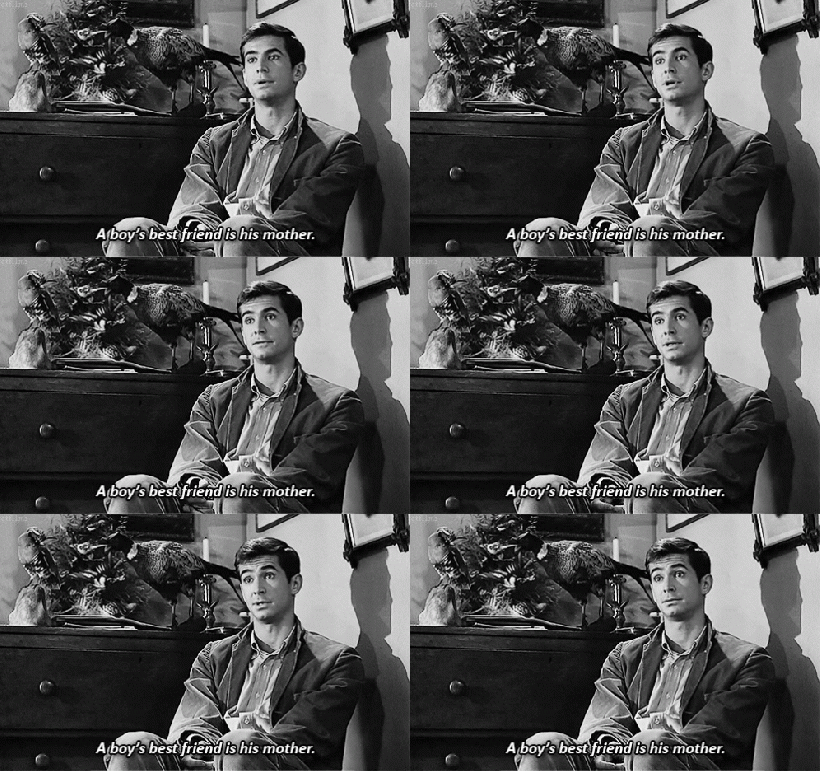
(Image credit )
Except in the case of Norman Bates, she is definitely not.
Although Hitchcock’s Psycho eludes to the unstable relationship Norman Bates had with his mother growing up, it doesn’t entirely highlight exactly how traumatic his childhood was, which in turn led to him developing multiple personality states. This is most likely due to the fact that the cause of what Norman appears to suffer with (Dissociative identity disorder) had not yet been understood in much depth. Even today, the understanding of DID isn’t perfect, so Hitchcock’s take on it is actually pretty impressive.
As if it isn’t clear enough by Norman’s venomous glare, Hitchcock and Hermann have added intense string music to the score while Marion suggests they send Norman’s Mother “someplace”. The fact that Norman also goes into specific detail about the inside of mental institutions eludes to the fact he may have been there himself. Perhaps this is some kind of not-so-subtle foreshadowing about his own mental health. He even tries to justify his mother’s behaviour by suggesting we ‘all’ go a little mad sometimes. Maybe so Norman, but I think my coffee induced tantrums are a bit different to murdering one of my Motel guests. It does show us that Norman doesn’t see anything wrong with how he has been treated. This is common among survivors of abuse.
In essence, this short clip gives way to how much control Norman’s mother has over him. And at this point, audiences would not have known she was dead (because, let’s be honest, everyone knows the infamous plot twist by now even if they haven’t seen the film), so it seems as if Norman is a bit of a man-child with an overbearing matriarch in his life. Perhaps next time we’ll think twice about stomping our feet when our Mum asks us to do the dishes or be home by a reasonable hour. This in turn means from two minutes alone, it’s apparent Mummy Norman isn’t a very savoury character, even if Norman believes otherwise.
So what exactly happened to Norman?
The common understanding around multiple personalities (DID) is that it stems from repeated and early childhood trauma. Not that I would have been particularly offended if Psycho was not produced with this evidence in mind, it seemed fit to have a look at the past of Norman Bates.

(Image credit)
The only real information we’re given in the film is that Norman’s father died when he was very young, leaving Norman and his mother, Norma (no, that isn’t a typo, his mother is actually named Norma) alone. They lived as if ‘there were no one else in the world’ until Norman reached his teenage years, when Norma decided to remarry. However, Norman wasn’t very pleased with this and killed off both Norma and her new husband. According to the plot of Psycho, Norman went on to develop dissociative identity disorder after a brief stay in hospital for the ‘shock’ of the death of his mother. Presumably this is a fault in the knowledge of the disorder, but it’s actually fairly easy to make it plausible again.
First of all, Norman was raised alone with his mother, who was clearly abusive. This could have led to the development of his alter (alternate state of consciousness), Mother. It is not uncommon for those with DID to have alter parts who resemble abusers, but that’s a really long thing to go into so that’s enough to keep in mind for now. Chances are, Norman would have developed the disorder at a very young age, but ‘Mother’ did not come to the surface until Norma herself had died.
Alternatively, Bates Motel is a modern series about Norman Bates growing up, and it is not subtle at all about the emotional abuse Norman was subject to from his mother. Freddie Highmore portrays a young Bates and his role includes many more elements that are characteristic of DID such as amnesia and dissociation. With this on top of the other evidence from the original Psycho, it is definitely safe to say Norman is indeed very traumatised. By his mother. Who in turn, probably shouldn’t be considered his best friend.
With that said, enjoy young Mr. Bates’ tips for Mother’s day.
 Sparkmovies